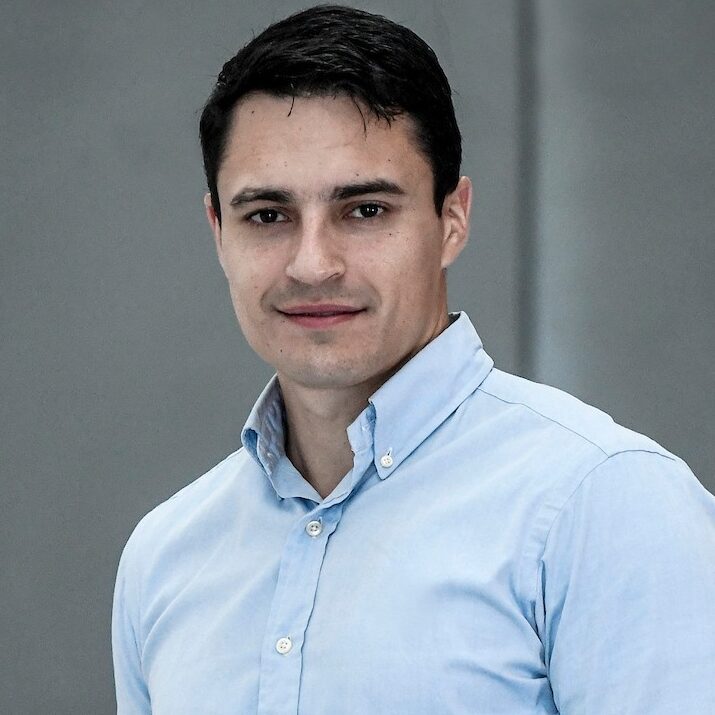
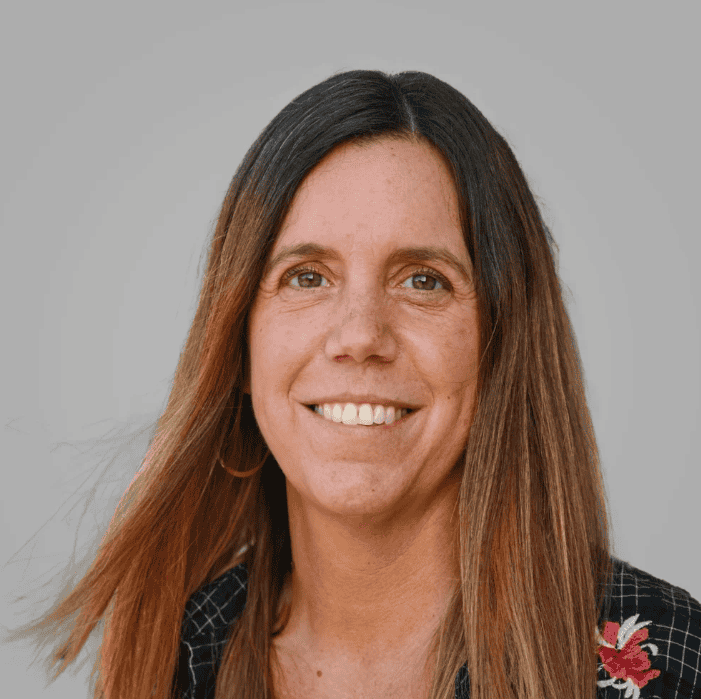
We recently sat down with the five techbio companies accepted into the Fall 2026 Drive cohort to learn more about their science, their “ah-ha” moments, and how Drive is changing the trajectory of their business. Today it’s GUSKA, an AI-powered biotech developing programmable RNA-based oncolytic virotherapies for aggressive solid tumors. We spoke with Scientific Leaders Gonzalo Moratorio and Pilar Moreno and CEO and biotech engineer Nicolás Tambucho.
1. What problem are you obsessed with solving, and why does it matter right now?
Glioblastoma. It is the most common and most lethal brain cancer in adults, and a patient diagnosed today receives the same surgery, radiation and chemotherapy a patient received twenty years ago, with a median survival of around fifteen months. Drugs struggle to reach the brain, the tumor cannot be fully removed, and it is immunologically cold, so, immunotherapies such as checkpoint inhibitors have limited effects, reducing the therapeutic options.
We are also personally facing this. A year after we founded GUSKA, our scientific co-founder Gonzalo Moratorio was diagnosed with glioblastoma. He is living the disease the company was built to treat, and since that day the numbers above have not been statistics to us. They are our own.
2. What’s a recent moment that made you think, “this could really work”?
It happens more often than you would expect. Every time we challenge our viruses against a new tumor cell line or read out an in vivo study and see the effect hold, we get a version of that moment. Two recent ones stand out.
The first was a neurotoxicity study in mice. The viruses were injected directly into the brain and were well tolerated at every dose we tested. For a therapy that has to reach a brain tumor through the route neurosurgeons already use, that was the result we needed.
The second came from our AI platform. It generated 10,000 redesigned versions of the virus surface proteins, and we synthesized the first 20 in the lab. Of those 20, 16 came back viable and killed tumor cells, which is already impressive and speaks well of our biology-first approach to AI rational designs. That one matters because oncolytic viruses have a hard ceiling. After the first systemic dose the patient makes neutralizing antibodies, and a second dose can be blocked before it reaches the tumor. Our variants are designed to change only what the immune system sees, while keeping the virus’s tropism, potency and safety. If that holds, repeat dosing becomes possible, and that would change what this class of therapy can do.
3. Since joining Drive, what’s one shift in your thinking, strategy, or network that’s had a real impact on your company?
Before Drive we were telling two stories at once, a biotech with promising viruses and an AI platform with a long-term vision. Our mentors pushed us to tell one.
At our stage, the value sits in the therapeutic asset, and the platform is upside that is being built now. So we now lead with what the engine produces, such as the surface variants built for repeat dosing, rather than with how the engine works. We rebuilt our roadmap as a single timeline that ties every program milestone to the round that funds it, and the reaction from the mentors was immediate.
Drive has also compressed our timelines. Conversations with investors and regulatory experts that would have taken us months to arrange happened in a matter of weeks. And beyond the meetings themselves, it has helped us position the company and start building trust inside the Boston ecosystem. Coming from Uruguay, that is the part that takes years when you do it on your own.
We are grateful to MassBio for believing in science and technology regardless of where they come from. They have been genuinely key to how this company is developing.