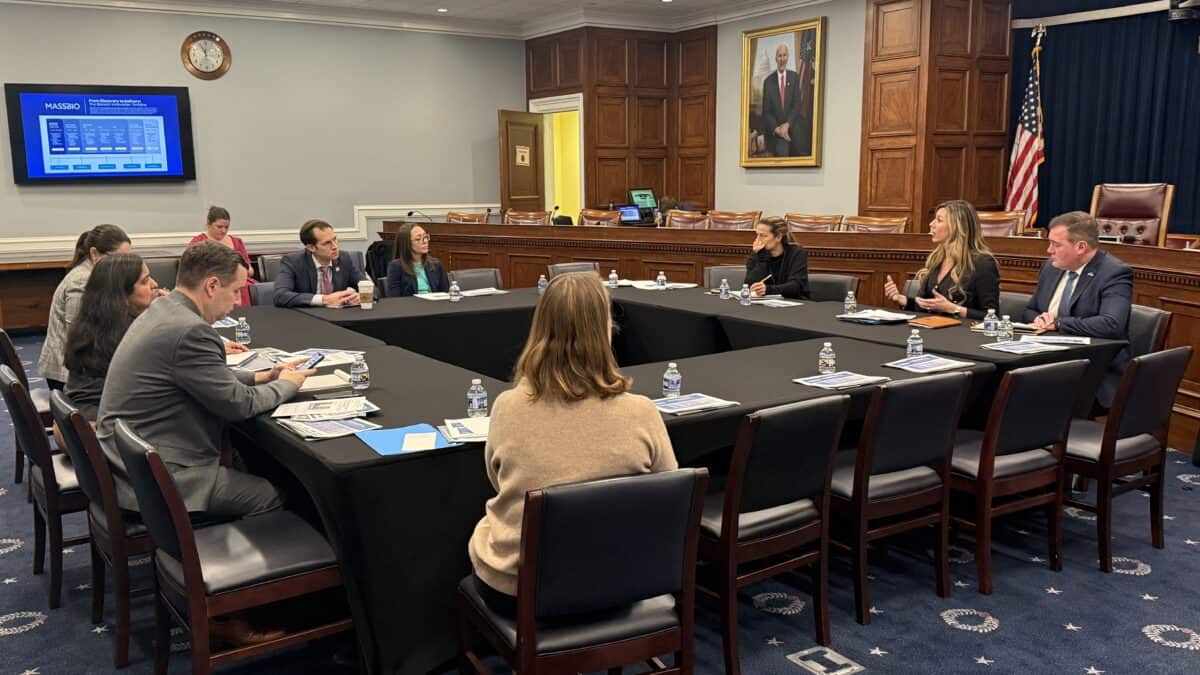
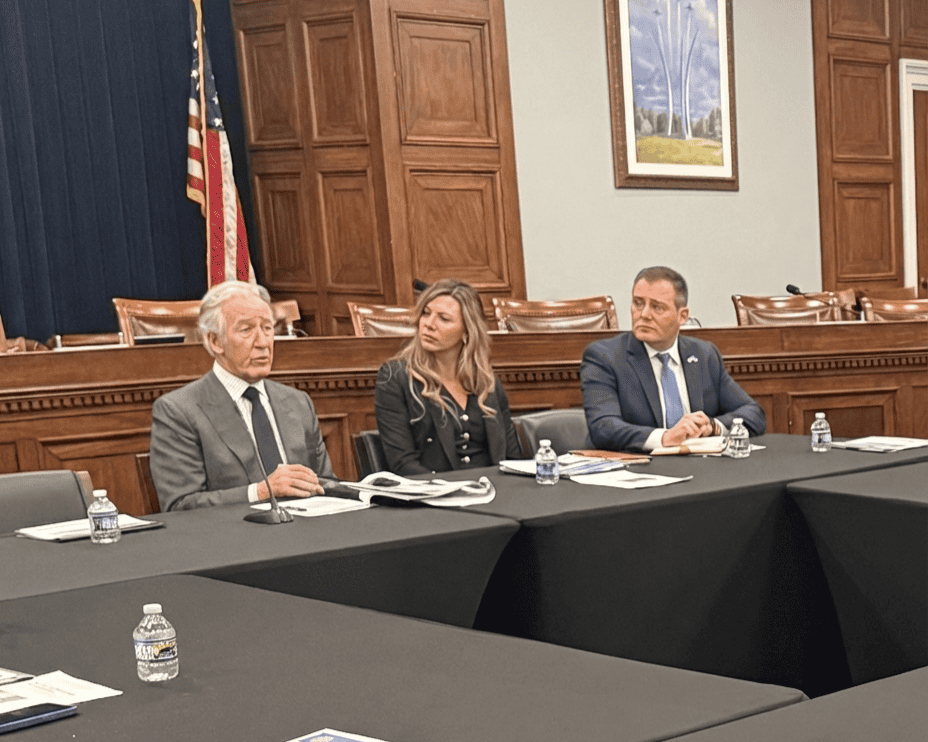
MassBio CEO & President Kendalle Burlin O’Connell originally shared this on LinkedIn. Kendalle and MassBio’s Head of External Affairs Ben Bradford met with the Massachusetts congressional delegation on Thursday, January 22, 2026 in Washington, D.C.
MassBio appreciated the opportunity to have a candid conversation with the Massachusetts congressional delegation about our state’s life sciences ecosystem, and how Congress can act to keep it strong. Massachusetts’ advantage is built on a tight flywheel across academic research, startup formation, investment, and scale-up. Throughout the roundtable, the common theme was that policy uncertainty can disrupt that flywheel quickly, especially for smaller companies operating on narrow runways. Some takeaways from our conversation:
NIH Appropriations: We discussed the draft appropriations text released this week and our support for continued robust NIH funding, as well as concerns around the stability of NIH funding, especially in the mechanics of how grants are funded. For Massachusetts, NIH dollars are the fuel for discovery science, core facilities, and translational work that eventually leads to company formation and the development of new treatments. We shared our concerns that continued movement toward multi-year funding will impact opportunities for new and breakthrough science to get funded. What we’re watching next: Whether Congress successfully passes NIH Appropriations, and whether multi-year funding at 2025 levels continues.
FDA Clarity: We reinforced the message that predictability at FDA is now a core competitiveness issue, especially as global competition makes it cheaper and more efficient to launch clinical trials abroad. We shared how companies and investors depend on stable leadership, consistent expectations, and clear guidance that supports efficient clinical development, particularly for emerging sponsors running trials on lean budgets. When regulatory signals feel inconsistent, it increases the risks of delays in trials and difficulty raising capital because timelines become harder to underwrite. That dynamic hits smaller companies first, but it ultimately affects the entire innovation pipeline. What we’re watching next: Signals from Congress and the Administration to direct FDA to improve consistency and transparency in clinical trials.
IP Security: We discussed the importance of preserving strong, reliable intellectual property protections, especially for early-stage companies built around a narrow set of foundational patents and licenses coming out of universities and research hospitals. Massachusetts’ innovation model depends on confidence that IP can be protected, licensed, and enforced in ways investors understand and can price. Looming threats, such as proposed new fees, policy changes that effectively devalue patents, or uncertainty around commercialization incentives, can chill financing and partnering even before anything becomes law, because early-stage capital is highly sensitive to perceived policy risk. What we’re watching next: Any specific administrative or legislative proposals that would increase patent-related costs or weaken commercialization incentives, and whether policymakers move toward clearer guardrails that protect the university-to-startup pipeline and the incentive structure that underpins private investment.
SBIR/STTR Reauthorization: We flagged that the ongoing pause in SBIR/STTR activity is a real and immediate problem for early-stage innovation. For many Massachusetts startups, SBIR provides non-dilutive funding that bridges the gap between academic discovery and venture-scale validation. When that bridge becomes unreliable, companies either delay programs, reduce scope, or seek capital on less favorable terms. What we’re watching next: We urged the delegation for swift congressional action that restores predictable SBIR/STTR operations and creates strong incentives for early-stage research and commercialization, along with clear guidance to agencies to avoid bottlenecks and keep award timelines on track.
