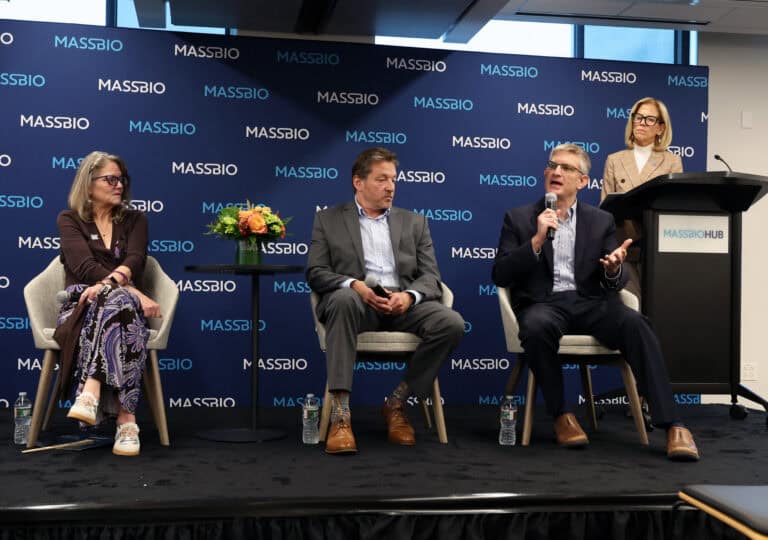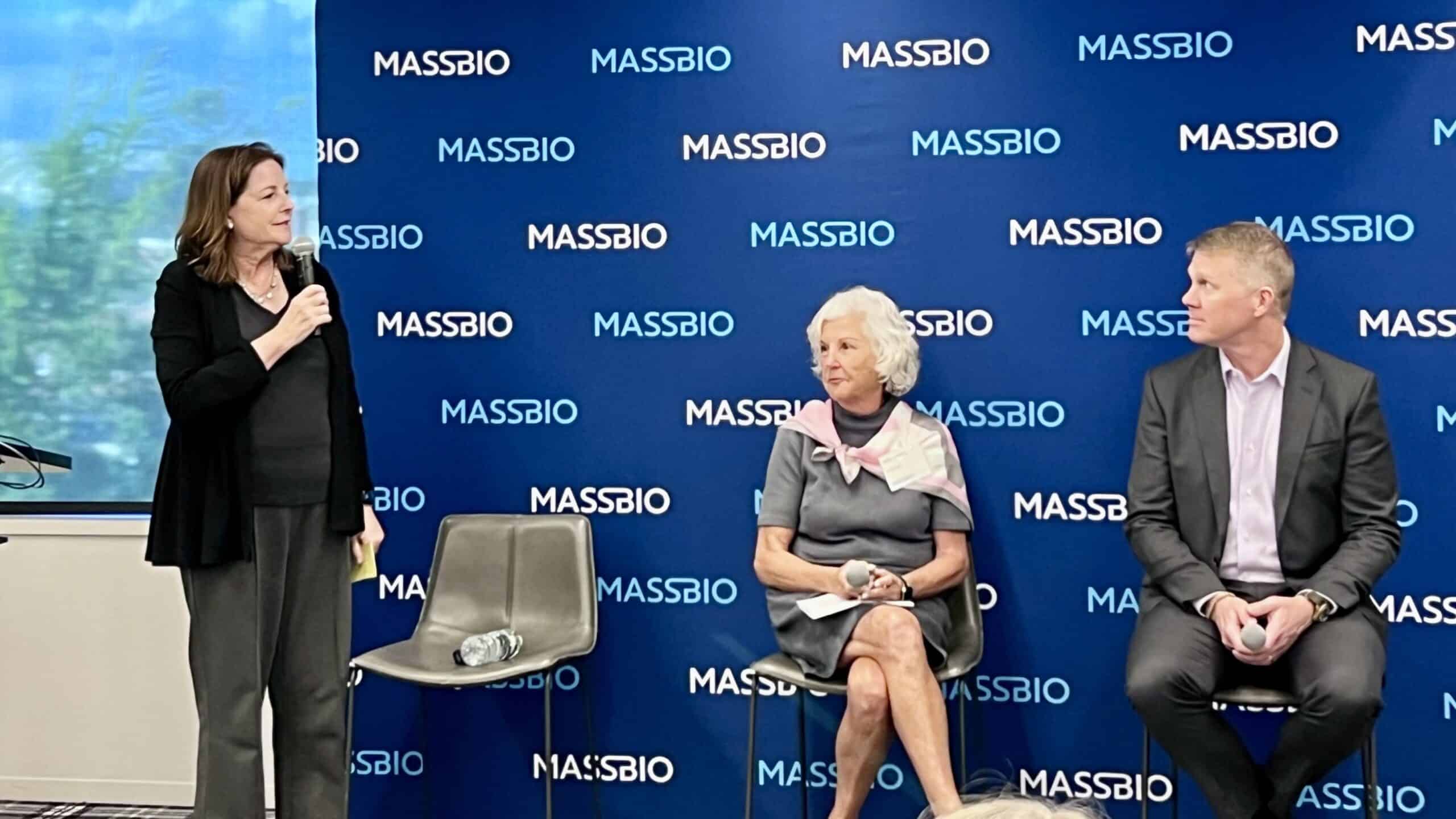
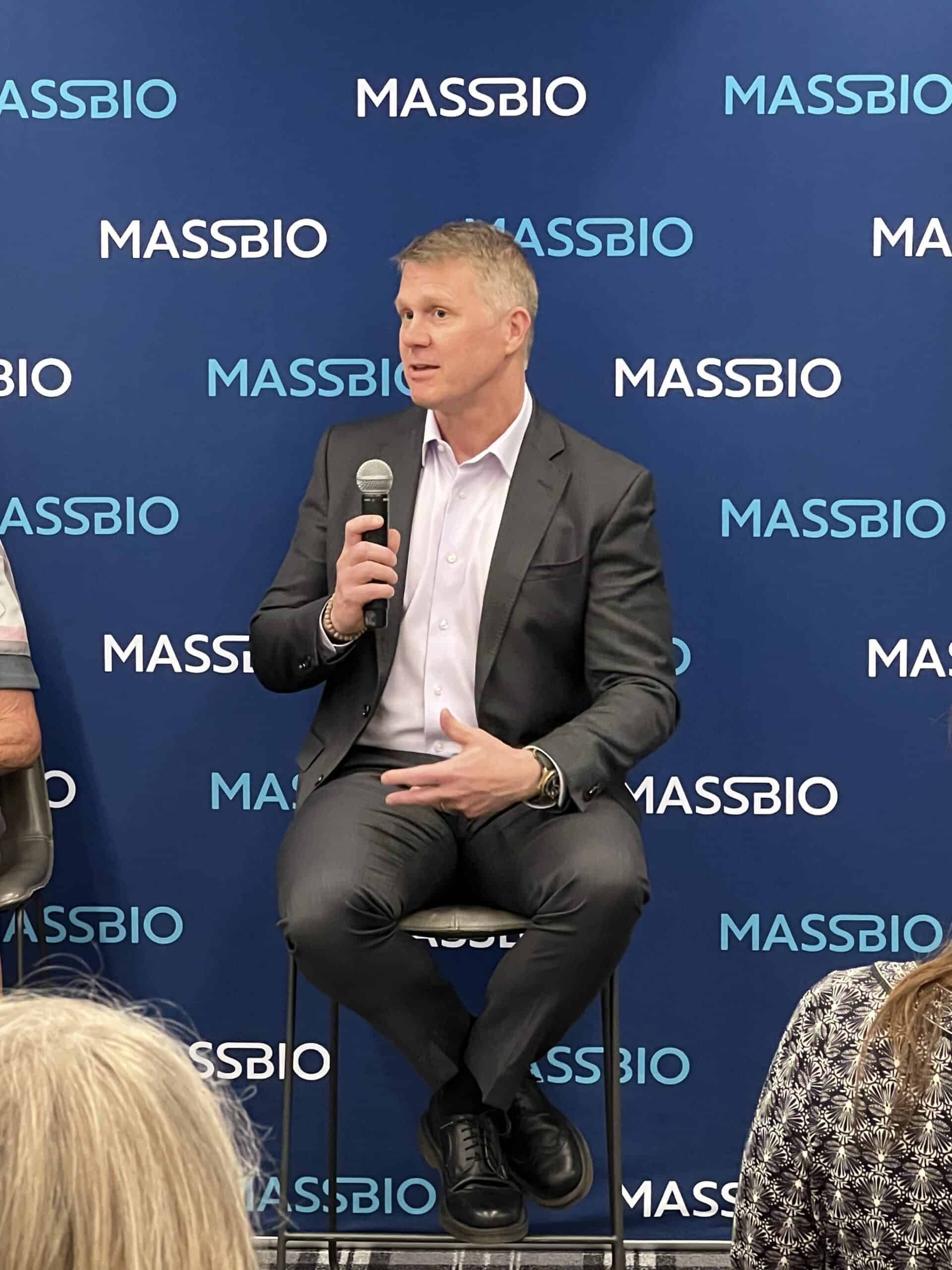
Last Thursday, MassBio hosted a timely forum on the state of the biopharma industry, drawing a packed room eager to hear from leaders navigating today’s toughest challenges. The discussion, moderated by Maryann Gallivan, President & CEO of Tunnell Consulting, featured insights from Nancy Briefs, Co-Founder & CEO of AltrixBio, and Brian Reid, Founder of Reid Strategic. Over the course of the conversation, panelists painted a picture of an industry under pressure but brimming with creativity, collaboration, and cautious optimism.
A Changing Landscape of Public Perception
Reid opened with a sobering assessment: the traditional “constituency for science” is no longer guaranteed. Over the past four to five years, he noted, public support has fractured, leaving biopharma vulnerable to shifting ideologies and policies. This erosion makes it harder to secure durable, commonsense healthcare policies. The challenge for the sector, Reid argued, is to rebuild trust by demonstrating the value of innovation in ways that resonate with patients, policymakers, and payers alike.
For Briefs, this realization came firsthand. As an entrepreneur, she admitted she once focused almost exclusively on science and patients—rarely thinking about public policy. But after struggling for three years to close financing, she’s convinced the industry must tell its story more forcefully, not only to policymakers but to the public. “It’s hard to imagine that people don’t get it,” she said, “but we need to keep proving why what we do matters.”

The Funding Squeeze and Creative Survival
Perhaps the most personal and practical part of the discussion came when Briefs recounted AltrixBio’s long road to securing financing for its small molecule therapy targeting Type 2 diabetes and obesity. Despite operating in one of the hottest therapeutic areas, traditional venture capital was unavailable. Her team survived by hibernating for two years, working without salaries, and ultimately raising funds through an Indian pharma partner, a family office, and a high-net-worth individual with a personal connection to diabetes.
These creative solutions underscore what Briefs called the “new normal”—at least for the next several years. Entrepreneurs will need to get scrappy, she said, whether by outsourcing development, leveraging local manufacturing, finding smaller law firms, or even serving as their own IT support. Gallivan noted that tighter budgets are forcing companies to rethink what they must own versus what they can outsource, which may ultimately make the ecosystem more efficient.
Collaboration as a Lifeline
Another consistent theme was the power of networks. Briefs stressed that survival in today’s environment depends on collaboration—within companies, across startups, and with patient advocacy groups. Massachusetts, she said, offers an unparalleled ecosystem of talent, incubators, and partners, but companies must take advantage of it by showing up, sharing experiences, and supporting one another.
Reid agreed, pointing to the improved advocacy and patient engagement now seen in many therapeutic areas as a bright spot. If companies can link arms with patients and prove value in clear, financial terms, they still stand to succeed.
Policy, Partnerships, and the Systemic Challenge
The conversation also highlighted the role of government and public-private partnerships. Reid criticized federal policy as “all sticks and no carrots,” urging more incentive-based approaches to de-risk early-stage investment. Both panelists praised Massachusetts for programs like the Life Sciences internship initiative, which has been a boon to small companies while giving students real-world experience.
On the scientific front, cell and gene therapies emerged as a flashpoint. Reid cautioned that while the science is moving quickly, the healthcare system is not prepared to deliver these breakthroughs equitably or cost-effectively. His fear: innovations could sit on the shelf, not because they failed in the clinic, but because the system couldn’t adapt in time.
Looking Ahead: Five Years Out
When asked to look into their crystal balls, both panelists returned to themes of adaptation and value. Briefs predicted more strategic partnerships—even between small companies—greater alignment with patient advocacy groups, and a rise in out-licensing strategies to fund core programs. She also flagged potential long-term shifts if retirement funds begin investing in private companies, opening new pools of capital.
Reid, meanwhile, warned that increasing healthcare spending is reaching an inflection point. In five years, he predicted, biopharma companies will need to demonstrate not only safety and efficacy but also clear economic value. Products that can’t show they displace lower-value spending may not make it to market.
A Community Poised to Push Forward
Despite the sobering tone, the forum ended on a hopeful note. Both panelists underscored the resilience of Massachusetts’ biotech cluster, the ingenuity of its entrepreneurs, and the strength of its networks. If companies can continue to adapt, partner creatively, and keep patient value at the center, the industry will not only weather this downturn but emerge stronger.
As Gallivan put it, the challenges ahead may force new efficiencies, but they also offer an opportunity: to rethink how innovation is funded, delivered, and understood by the public. And in Massachusetts, the community is already laying the groundwork to seize that opportunity.