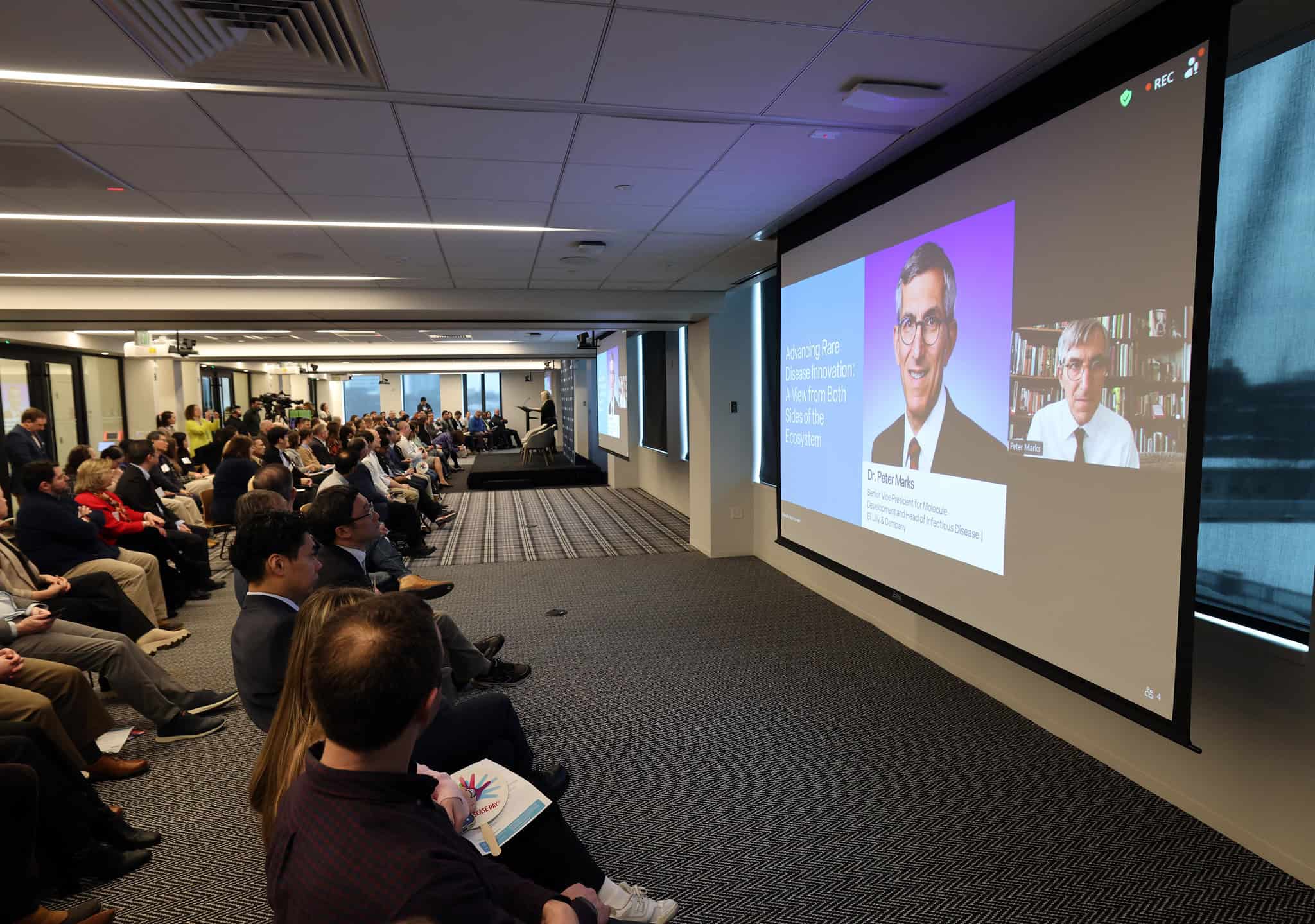
Peter Marks, former Director of FDA’s Center for Biologics Evaluation and Research and current Senior Vice President at Eli Lilly, joined MassBio’s Rare Disease Day to share his vision for scaling gene therapy to reach the thousands of patients who need it most.
Three faces tell the story.
Emily Whitehead was one of the first pediatric patients to receive CAR-T cell therapy for relapsed, refractory acute lymphoid leukemia. Ten years out, she appears to be cured. Nico Nieves was treated early in life for spinal muscular atrophy with gene therapy; without that intervention, he would not be standing today. And then there is Baby KJ, who received a bespoke genome-editing therapy developed in a matter of months, a so-called “n-of-1” treatment that may well have saved his life.
These are not abstractions. They are proof points—evidence that the era of genetic medicine is not coming. It is here.
“When you look at the faces of these individuals, you realize what a difference it’s made,” said Marks.
27 Approvals, and a Much Larger Challenge
Over the past decade, the United States has approved 27 gene therapies: cell-based therapies often targeting rare cancers, localized gene therapies for genetic diseases, and systemic therapies for rare disorders. By any historical measure, it is a remarkable accomplishment.
And yet: there are thousands of rare diseases.
The gap between what is scientifically possible and what patients can actually access was the central challenge Marks laid out for the Rare Disease Day audience. The barriers are real and layered:
- demonstrating safety and efficacy in populations that may number only in the hundreds;
- the absence of natural history data for many conditions;
- the complexity and cost of manufacturing viral vectors;
- immunosuppressive requirements; and
- regulatory frameworks that differ enough across countries to keep an approved therapy out of reach for patients who need it on the other side of the world.
“How are we going to pick up the pace so that we can actually get to treating the patients we can potentially treat today?”

Rethinking Benefit-Risk for Rare Disease
Part of the answer, Marks argued, lies in how we think about risk.
For most of pharmaceutical history, the standard calculus favored caution: drugs used by large populations needed a strongly favorable benefit-risk profile, and tolerating significant risk was the exception. Cancer changed that. The life-threatening nature of oncology earned a higher tolerance for risk in exchange for the possibility of meaningful benefit.
Many rare diseases, Marks suggested, deserve the same reckoning. They are severe. They are often life-limiting. And in most cases, there is no existing therapeutic alternative. “We urgently need to move forward, because there are so many people that need these products.”
That reframing matters not just philosophically but practically, because genetic medicines have properties that actually make a more streamlined path forward possible.
A Process-Based Path Forward
What makes gene therapy different from a typical drug? The mechanism of action is usually well understood. You know what’s missing and what you’re supplying, or what’s aberrant and what you’re correcting. The manufacturing process for a given class of gene therapies follows essentially the same basic approach from product to product. And within a class, the toxicity profile tends to be similar.
Those shared characteristics, Marks asserted, are the foundation for a new kind of approval pathway — one he described as process-based development and approval.
Rather than requiring each new gene therapy product to establish safety and efficacy entirely from scratch, regulators could approve a manufacturing and development process for a class of products after rigorous review of an initial cohort, perhaps three or four products. From there, subsequent products built on that same process, changing only the gene insert to address a new disease, would not have to start over. Safety and real-world data would be captured and submitted on an ongoing basis, building the evidence base over time.
It is not, Marks was careful to say, an entirely new concept. FDA’s recently published draft guidance on plausible mechanisms is a building block. But connecting those ideas into a coherent pathway for genetic medicine could change the economics and pace of the field fundamentally.
The downstream effects would be significant, from reduced non-clinical development costs (because existing data could be reused across products) to lower clinical development and manufacturing costs and a lighter regulatory filing burden. All of these would translate directly into broader patient access.
“When one makes another change in a gene therapy vector to insert a new insert that addresses a new disease, you don’t have to go back to the beginning.”
The Global Picture
Even a perfectly designed domestic approval pathway runs into a hard limit: patients with rare diseases live everywhere, but approved therapies often don’t.
Marks made the case for global regulatory harmonization, grounding the argument in equal parts patient advocacy and commercial logic. A rare disease affecting 500 people in the United States affects hundreds more in Europe and Asia. If a therapy approved in one country can more readily gain approval elsewhere, those populations aggregate into something more commercially viable, which is what sustains the ecosystem capable of developing the next therapy, and the one after that.
“It’s good for patients, and it’s also good for business, to be honest, to fix the global regulatory environment so that once a rare disease gene therapy is available in one country, it becomes available in other countries.”
Work toward that goal is already underway through the World Health Organization, the European Medicines Agency, and other bodies.
The Era Is Now
Marks closed with optimism grounded in evidence.
“We have an era of genetic medicine now that is indicated by the stream of products that have already been approved. We have a pathway that could potentially address genetic diseases affecting thousands of people, and thousands of diseases that could be conceived.”
The properties of genetic medicines, he contended, give the field the tools it needs to find that path forward. What remains is the urgency to pursue it — for the many patients who are waiting.
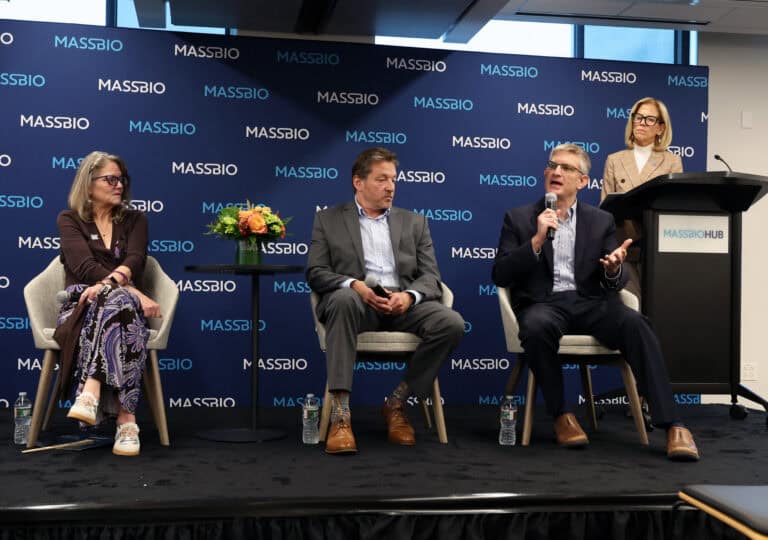
MassBio’s Rare Disease Day Forum brought together patients, advocates, researchers, and industry leaders to advance the conversation around rare disease treatments in Massachusetts and beyond.
Peter Marks Disclosures:
- Current employment: Eli Lilly and Company
- Former employment: Center for Biologics Evaluation and Research at U.S. Food and Drug Administration
- Opinions presented here are entirely those of the presenterand do not represent those of Eli Lilly and Company