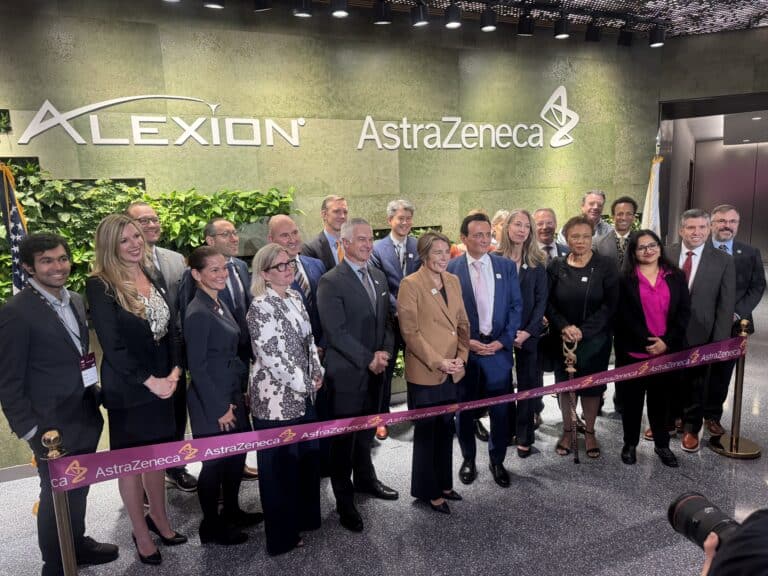
MassBio partnered with Dash Bio on November 20 to host R&D Reimagined, a new event designed to connect biotech and pharma R&D leadership with the industry leaders transforming the life sciences with new technologies and services. We sat down with Dave Johnson, the co-founder and CEO of Dash Bio, prior to the event talk about artificial intelligence, his experience at Moderna, lab automation technology, and more.
The new paradigm for drug discovery is dramatically accelerated—AI designs molecules in weeks. Why haven’t we seen an impact in the number of drugs in development or approved?
Because molecule design was never the bottleneck. We can generate candidates quickly now, but everything downstream moves at the same pace it did 20 years ago. Toxicology studies still take 6-9 months. GLP bioanalysis runs 12-16 weeks per study. Clinical trial enrollment is slow. Manufacturing scale-up is complex. The regulatory review process has its own timeline.
AI has compressed one part of a very long chain. The impact won’t show up in approval numbers until we address the operational infrastructure that actually controls cycle time. If you cut discovery from 3 years to 3 months but your path from IND to NDA still takes 8-12 years, you’ve barely moved the needle on total development time.
You were with Moderna through COVID. What did that experience teach you about what’s possible with the current infrastructure in the industry?
Moderna proved you can move at warp speed, but it also showed every CRO and vendor maxing out their capacity to support one program. The whole industry bent itself around COVID. We learned speed is absolutely possible, but also that the existing infrastructure can’t handle it at scale. A huge level of effort got us there. You can’t make fast the industry standard today, the ecosystem isn’t there. That’s the real lesson: we need support systems designed for speed, not heroic efforts that only work once. The Tech industry moves fast because they have a solid tech foundation, we need the same in Biotech.
Lab automation technology has been around for decades now. A lot of sponsors even use it for internal assay development. So why is it barely used by CROs?
The business model doesn’t reward it. Traditional CROs bill by the hour and employ large teams of scientists doing manual work. Automation requires significant capital investment and reduces billable hours. There’s no financial incentive to adopt it.
Sponsors use automation internally because they benefit from the speed and efficiency gains. CROs operating on a fee-for-service model see automation as margin compression. You need fewer FTEs, which sounds good until you realize the CRO’s revenue model depends on those FTEs. The misalignment is structural. Until the incentive structure changes, most CROs will continue to operate like they did in 1995.
Walk me through the life of a sample at a traditional CRO versus at Dash. Where does the time go?
At a traditional CRO: samples arrive and sit in receiving for 3-5 days while paperwork gets processed. They move to storage, then wait for a technician to be assigned to the study. Sample prep happens manually over several days. Each batch goes into a queue, which might be scheduled out two weeks because the instrument runs 9-5 and there are 15 other studies competing for time. Data review happens weekly in batching cycles. QC review adds another week. Then it sits waiting for final sign-off.
You’re looking at 12-16 weeks, but the actual instrument time might be 40 hours. The rest is waiting.
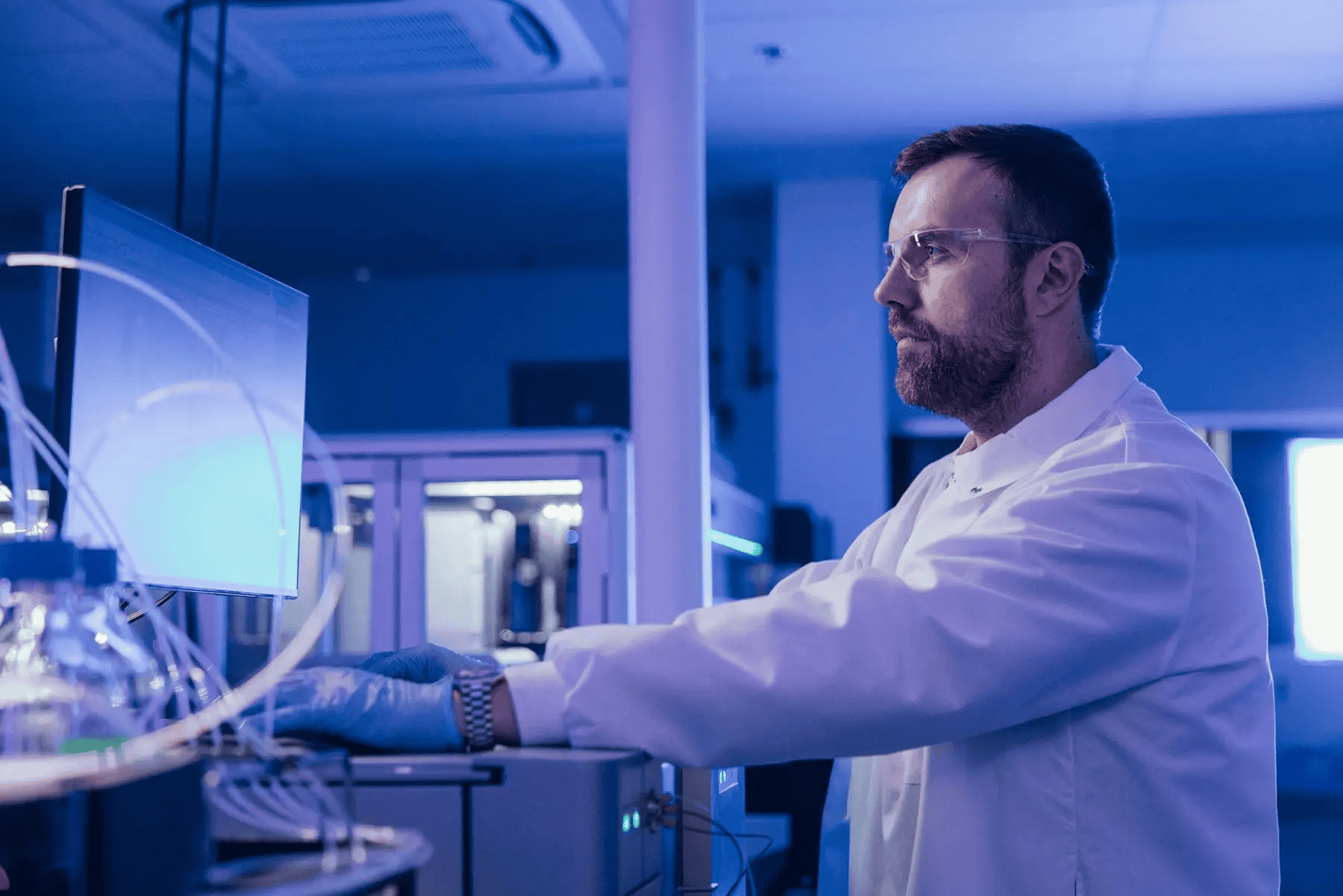
At Dash: samples are logged digitally on arrival. Robotics handle prep within 24 hours. Our systems run continuously, and studies are prioritized by SLA and FIFO rather than by whoever shouted loudest. Data flows directly into our analysis pipeline. We deliver preliminary results in days, final reports in about a week for clinical data. The work happens continuously instead of in batches.
You have extensive experience leveraging AI in drug development. In what areas do you think AI (and technology more generally) can positively impact drug development processes?
AI has the potential to completely transform how drugs are developed. However, it won’t be some single model that can solve development end-to-end. It will be countless smaller models and solutions all across the development pipeline that will work in concert. We already see this happening in discovery with hundreds of AI-enabled drug discovery startups tackling various pieces of the problem from identifying targets to finding deep insights in complex data.
In the clinical and regulatory areas of development, we’ll see large language models (LLMs) like ChatGPT revolutionize countless processes. So much of this space is written text: regulatory guidelines, patient records, case report forms, surveys, protocols, etc. LLMs are able to work with text in a way that no AI model has ever been able to do before. While the generative, stochastic nature of these models means that many heavily regulated use cases are off the table for the time being, there are numerous others such as report authoring that can be solved today.
About the Author
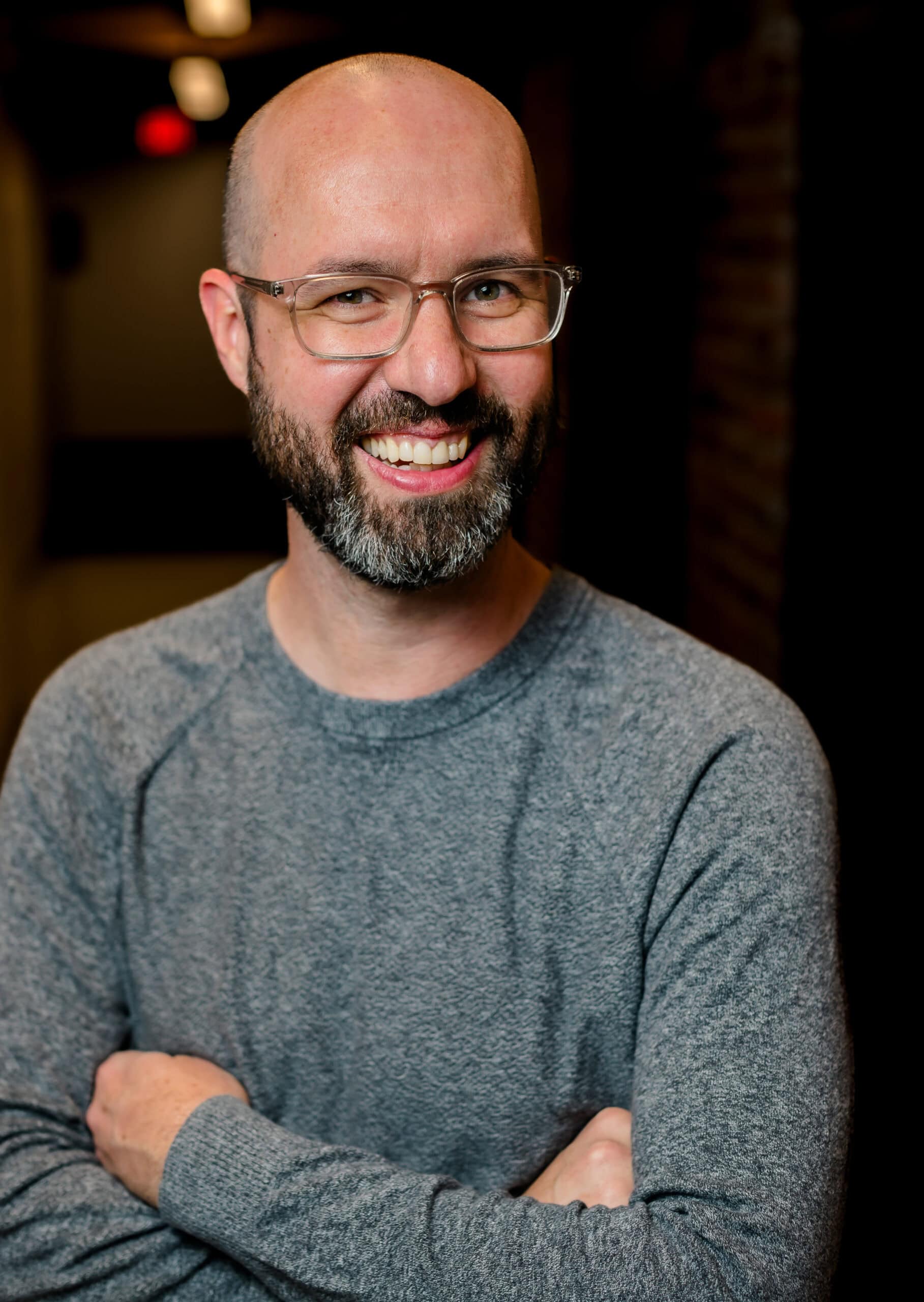
Dave Johnson is the co-founder and CEO of Dash Bio, a modern contract research organization offering dramatically accelerated pre-clinical and clinical bioanalysis through automation, data integration, and technology infrastructure. Before starting Dash Bio, Dave led a 200 person team across R&D technology, data science, software engineering, and AI strategy at Moderna as Chief Data and AI Officer. His work at Moderna was instrumental to critical programs such as high-throughput mRNA synthesis, personalized cancer vaccines, and Moderna’s COVID-19 vaccine. Dave holds a PhD in Physics from University at Albany specializing in Information Physics and Bayesian statistics and a Master’s in Biotechnology from Johns Hopkins.