The biotechnology industry has spent the better part of two years navigating layoffs, tight capital markets, and an increasingly hostile federal environment. Against that backdrop, a handful of decisions made in Massachusetts over the past year carry a particular weight. Not press release optimism, but genuine, long-term bets: a 16-story headquarters rising in Kendall Square, a portfolio of new companies pushing the boundaries of AI-driven medicine, and a governor using every tool available to keep the Commonwealth ahead.
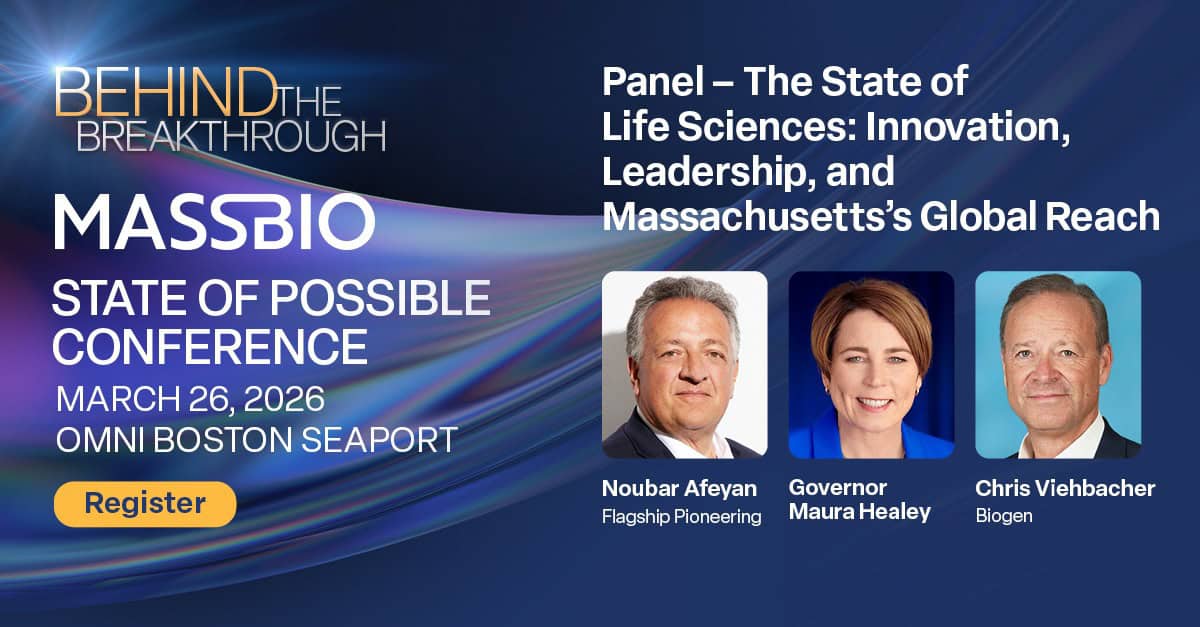
At the State of Possible Conference, three of the people most responsible for those decisions will share a stage for a conversation about what it takes to sustain a global leader in biomedical innovation. That panel, moderated by MassBio CEO and President Kendalle Burlin O’Connell, will feature Biogen CEO Chris Viehbacher, Flagship Pioneering founder and CEO Noubar Afeyan, and Governor Maura Healey. Why does this conversation matter? It starts with Kendall Square.
Biogen and the meaning of a commitment
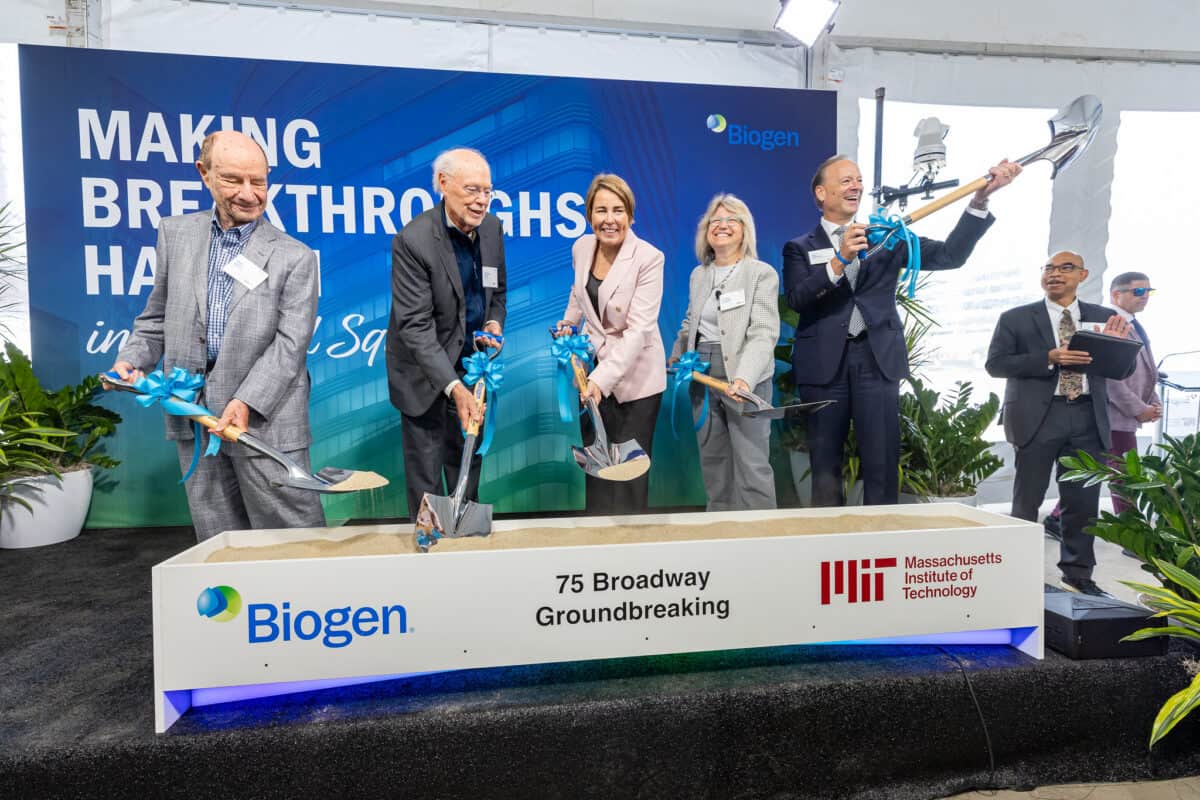
In March 2025, Biogen announced it would consolidate its Cambridge operations into a new 580,000-square-foot global headquarters at 75 Broadway, the first building to rise on MIT’s Kendall Common development. Then, in September, with Nobel laureates Walter Gilbert and Phillip Sharp in attendance, the company broke ground. The crowd gave those two co-founders a standing ovation. Biogen was founded in 1978. It has been in Kendall Square for more than 40 years. And at a moment when the biopharma industry was shedding jobs and cutting costs, the company signed a 15-year lease and started construction.
Viehbacher framed it plainly at the groundbreaking: “We decided to invest in the next chapter of Kendall Square because of what this community represents: talent, energy, ingenuity, and collaboration.” Governor Healey, who was on that stage, described Biogen as “building the future of medicine and innovation.” That the company chose to consolidate in Kendall Square rather than scatter to cheaper real estate, at a moment when the easy move would have been to cut and wait, is exactly the kind of signal the ecosystem needs the rest of the world to see right now.
MIT President Sally Kornbluth said it directly: when a company of Biogen’s stature breaks ground on a new global headquarters, it is “an unmistakable vote of confidence” in Massachusetts and the future.
Flagship Pioneering and the next generation
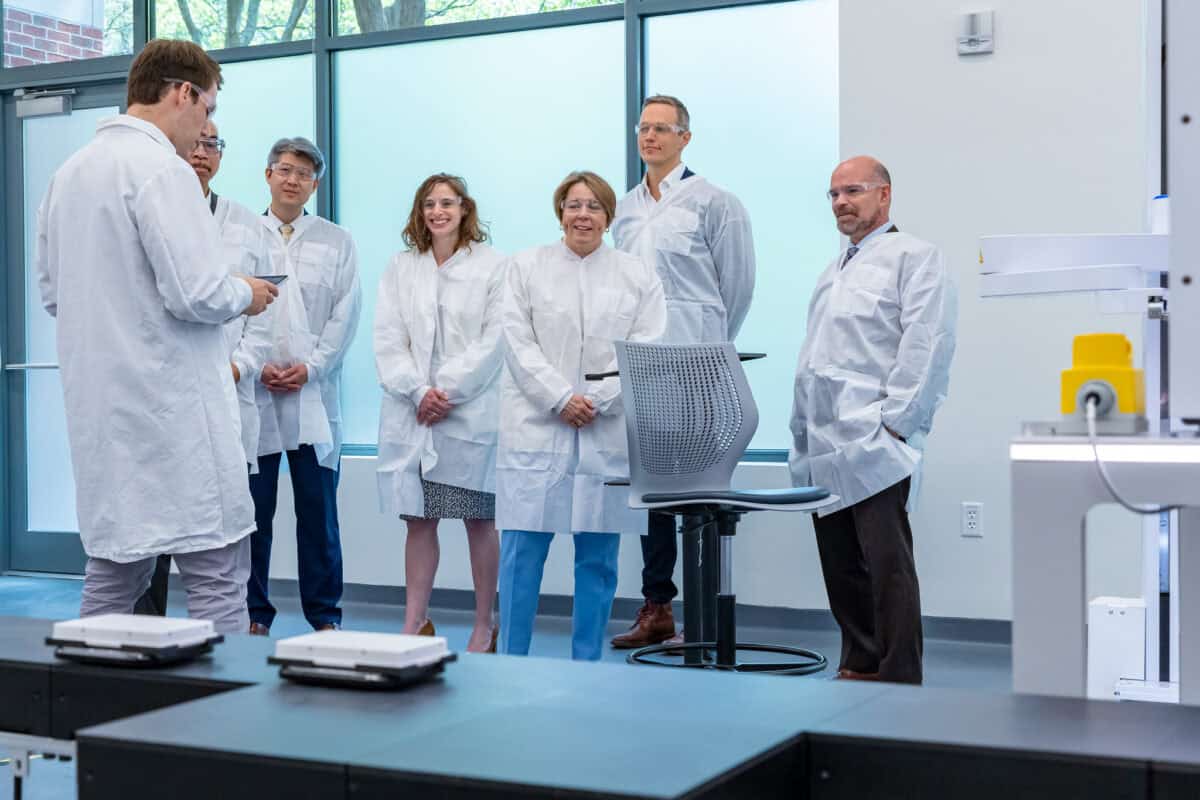
Since its founding in Cambridge in 2000, Flagship Pioneering has created more than 100 companies and currently operates with $14 billion in assets under management. Noubar Afeyan built Flagship around a specific theory: that breakthrough science doesn’t have to be an accident. You can systematically build the conditions that produce it and do it again. The portfolio is the evidence.
Heading into this panel, two of those companies are worth noting . When Governor Healey announced $29.9 million in MLSC tax incentive awards last June — awards expected to generate more than 1,500 new jobs across the state — she made that announcement at Lila Sciences, a Flagship company in Cambridge applying AI to drug discovery and committed to adding at least 100 new jobs in Massachusetts. And this month, Flagship-backed Generate Biomedicines filed for a $425 million IPO. Generate, based in Somerville, designs medicines using AI, and Afeyan is board chair. A Flagship company going public in this market is not a minor signal.
If you want to understand the thinking behind the model that produced both, we wrote about that here ahead of the presentation of the Henri A. Termeer Innovative Leadership Award to Noubar Afeyan at State of Possible.
A Governor who shows up
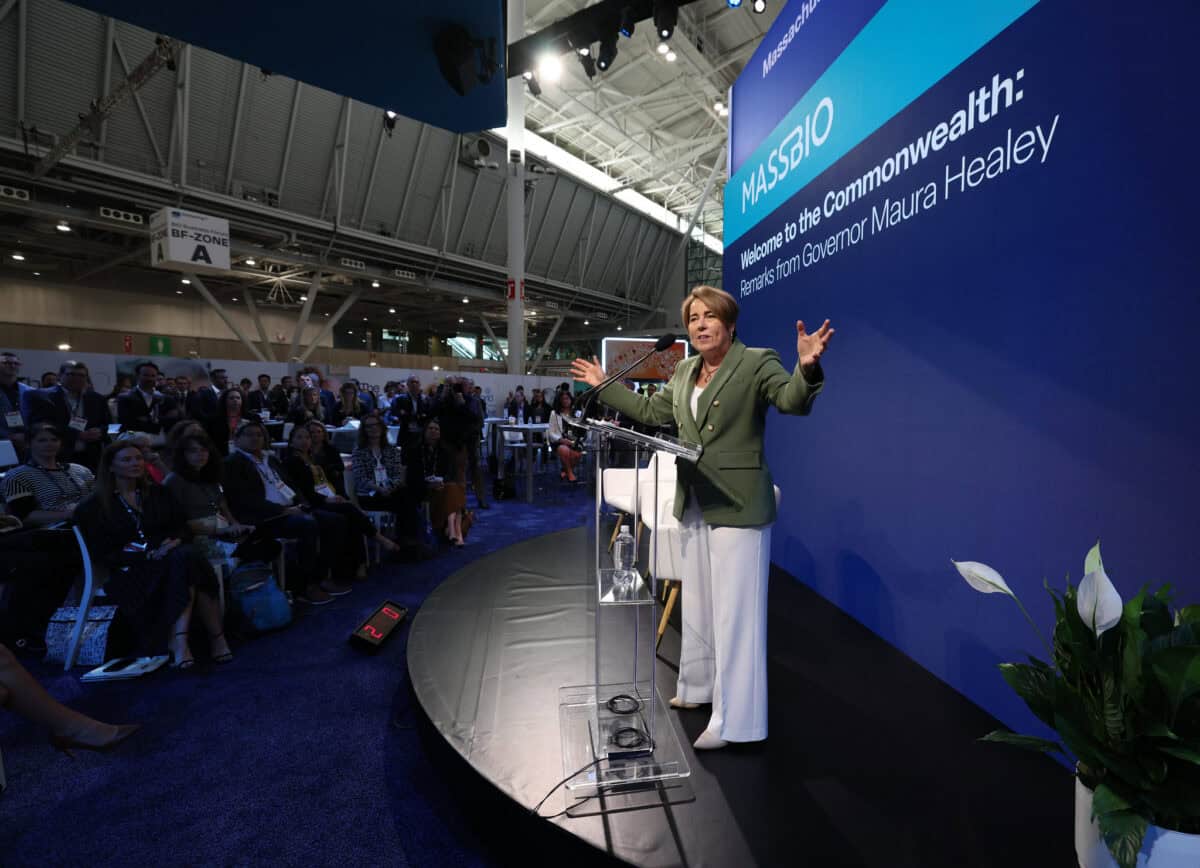
Governor Healey’s commitment to the life sciences sharpened in 2025. She signed the Mass Leads Act, dedicating $1 billion to the sector and reauthorizing the Life Sciences Initiative for another decade. When the federal government began cutting research funding, she responded with the DRIVE Initiative, a proposed $400 million state investment to offset the damage. And she made the point in terms that are hard to argue with: “For every dollar of federal NIH funding committed in Massachusetts, that’s generating another $5 or $6 in economic activity.” BIO recognized her commitment by naming her its 2025 Governor of the Year.
Leadership is a choice
Biogen’s roots in Massachusetts go back to the very beginning of the biotechnology industry. Flagship has rewritten how new companies are created and grown from that same soil. Governor Healey has used the full weight of the governor’s office to defend and reinvest in the conditions that make both possible. What connects them is not legacy, but an active, ongoing choice to make a substantial bet on Massachusetts right now. At State of Possible, Kendalle will lead a conversation about what it takes to sustain that: what the ecosystem is getting right, what remains at risk, and what the next chapter requires. There are very few rooms where this level of decision-making power is on one stage at once.
The 2026 State of Possible Conference takes place on March 26, 2026, at the Omni Boston Seaport. Register here.