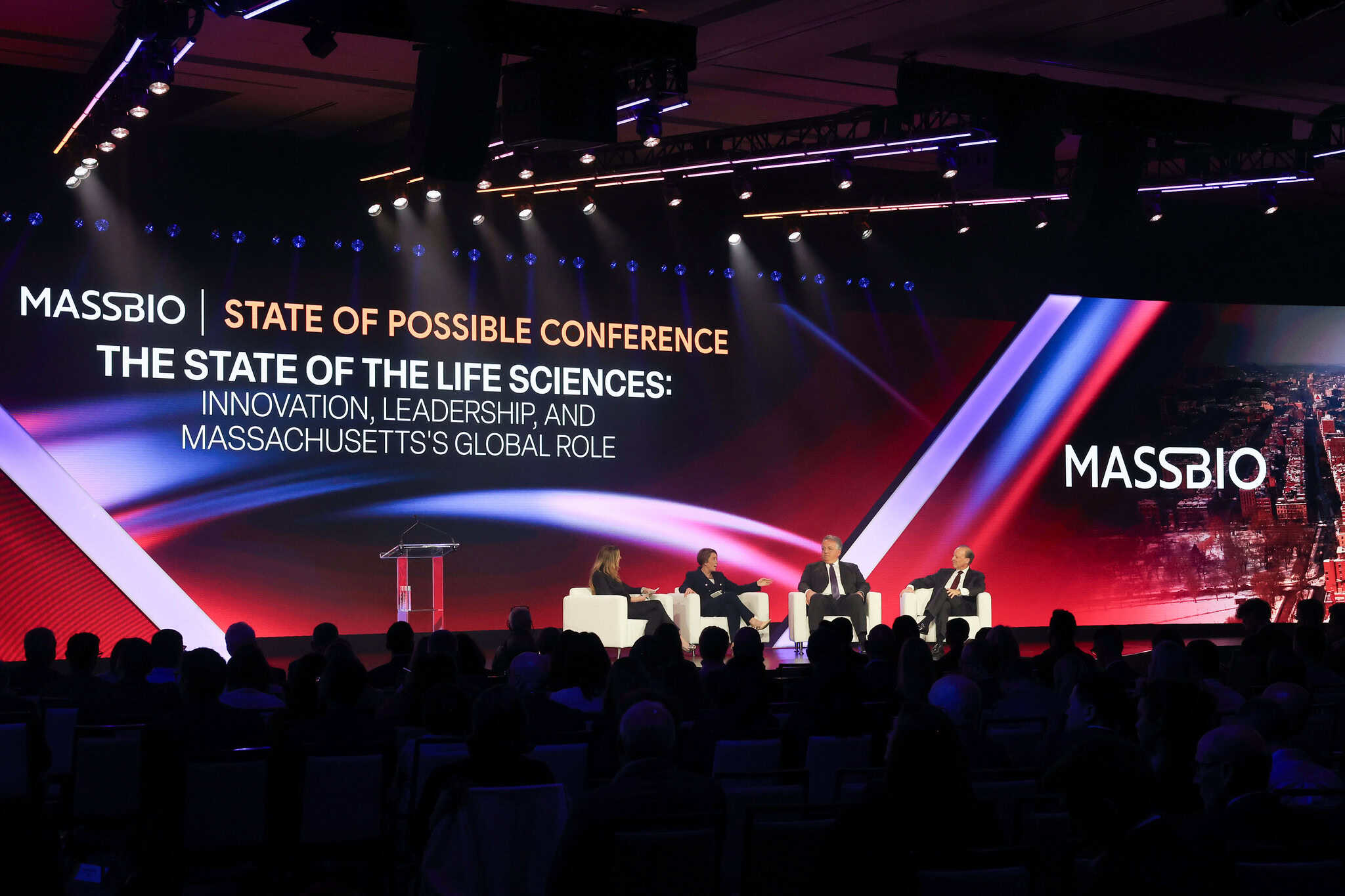
Massachusetts is the capital of life sciences, but leadership in biotech is never guaranteed – it must be defended. At the 2026 MassBio State of Possible Conference, a critical question emerged: What threatens our leadership, and what must we do to protect it?
Converging Threats: Competition, Capital and Policy Headwinds
The interesting thing about success, noted Biogen CEO Chris Viehbacher, is the perpetual danger of becoming comfortable. To stay successful, he urged, “we have to be optimistic and also wary of what the others are doing.”
For a long time, Massachusetts was the undisputed leader, but now, others are using our playbook. International players like China and domestic hubs like California and Texas are making aggressive, strategic investments to lure companies and talent.
While Governor Maura Healey expressed confidence in the Commonwealth’s unique, 250-year history of revolutionary ideas and innovation that “you can’t manufacture overnight in Austin,” Viehbacher and John Stanford, Novel Strategies Partner and CEO, highlighted a critical vulnerability of both Massachusetts and the US: speed.
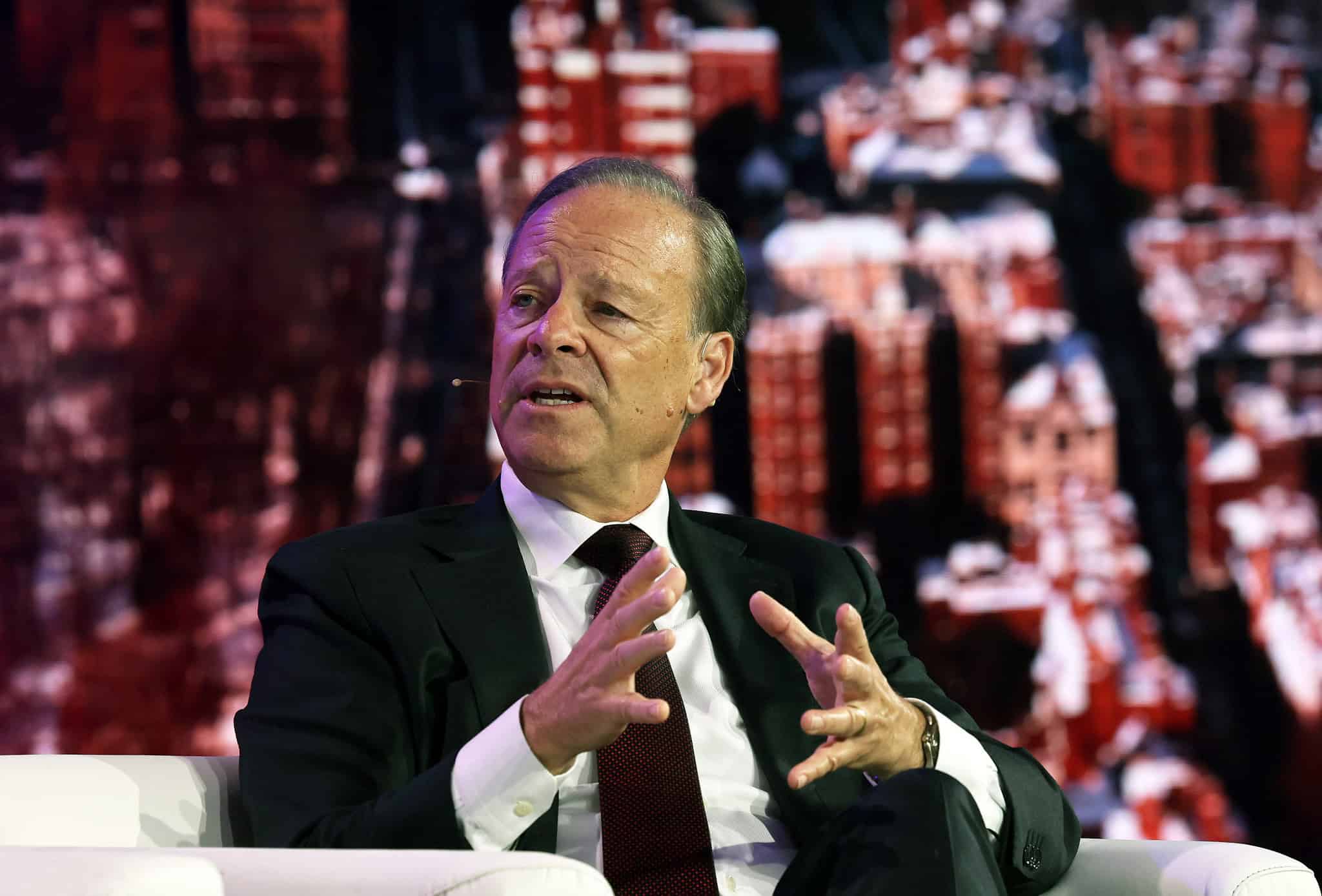
“China for a long time has been faster, cheaper – and we’re just entering the era of potentially better,” Stanford said. For example, in the US, it can take significantly longer to get a clinical trial off the ground than in China. This will have consequences, Stanford noted, and we have downward pressure to be more efficient. Viehbacher echoed this sentiment, saying, “We’re not necessarily going to go where it’s cheapest, but we do have to go where it’s fastest.”
This is compounded by a Wall Street funding environment that has shifted towards lower-risk bets, challenging the high-uncertainty nature of biotech. As Flagship Pioneering Founder and CEO Noubar Afeyan described it, the result is an industry that has become a “lottery” where only a few bets pay off – an unsustainable economic model.
In her remarks, Governor Healey highlighted concerns about the current political climate and its potential impact on Massachusetts’ leadership. She referenced decreases in federal support for healthcare, science, and research, and suggested that evolving immigration policies may also be creating additional headwinds for attracting top international talent to study, build labs, and invest in the US.
Fortifying Our Lead: People, Partnerships, and a New AI Frontier
So, how do we protect our ecosystem? The speakers agreed on a multi-faceted strategy.
First, focus on talent. “We tend to talk about technologies and molecules, but the secret sauce is really people,” Viehbacher said. This means attracting and retaining the best and brightest through apprenticeships, world-class education, and pro-immigration policies. Afeyan, who escaped the Lebanese Civil War as a teenager, emphasized that diversity and immigrants are strengths that “we need to maintain at all costs.”
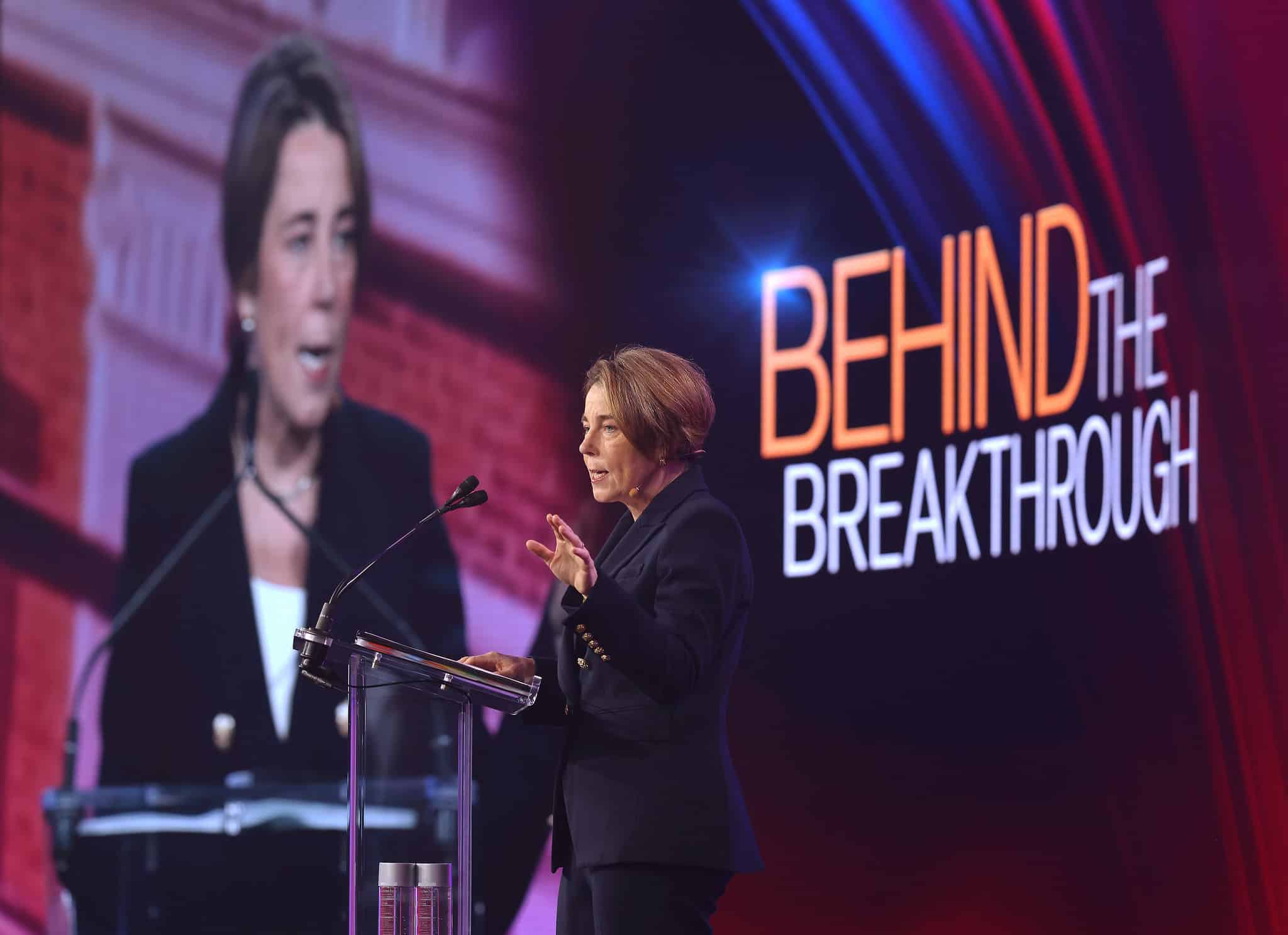
Second, strengthen public-private partnerships. The speakers highlighted the need for government to cut red tape, make the state more affordable, and advance early-stage companies. Governor Healey affirmed her administration’s commitment, proclaiming: “Massachusetts is open for business. Come to Massachusetts and call it home. They will be supported like no other government in the world.”
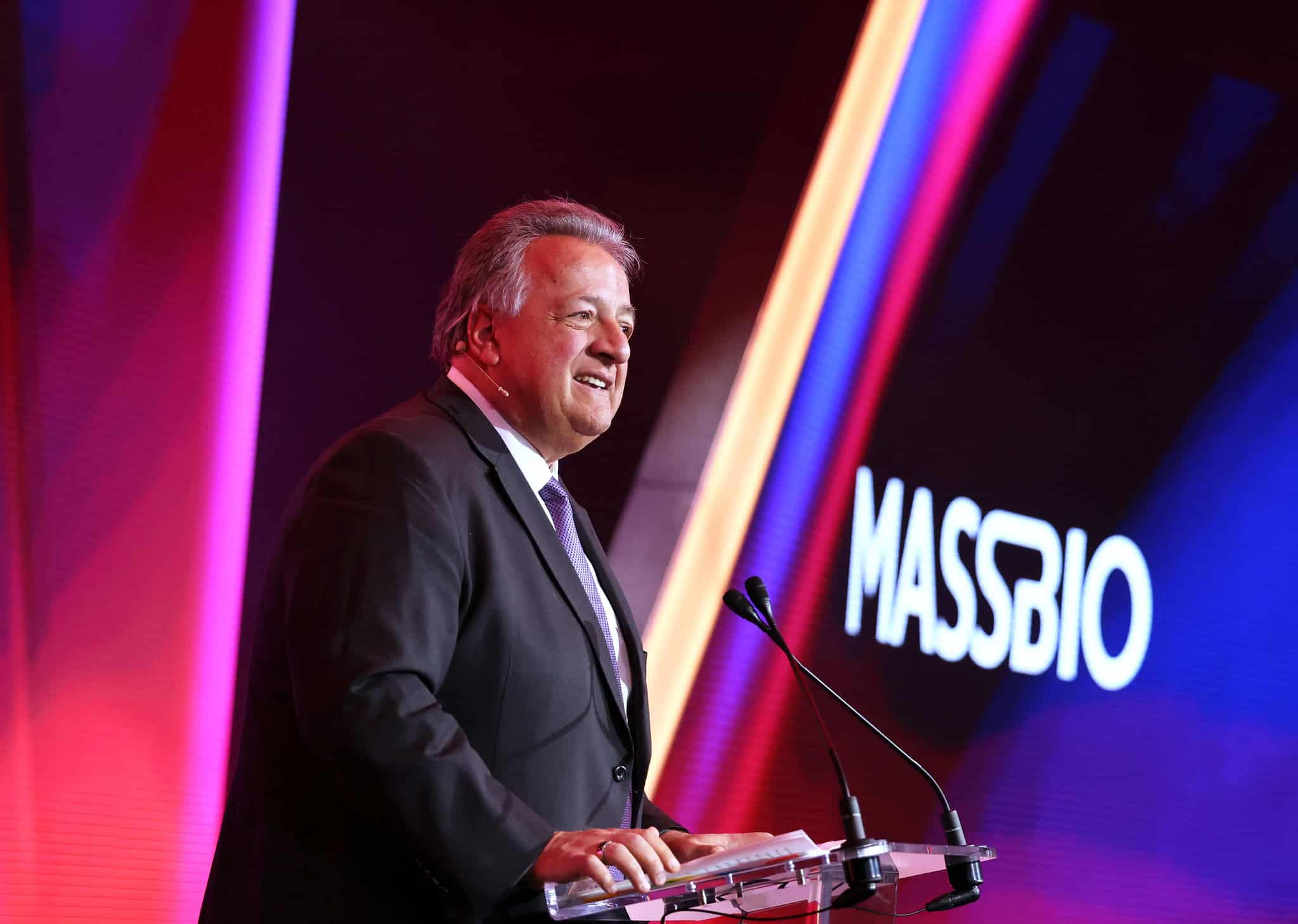
Third, lead the AI and life science convergence. Afeyan pointed out that the way AI agents interact and exchange information looks a lot like what happens in nature, and Massachusetts’ deep scientific expertise gives a clear advantage over tech hubs like Silicon Valley. This is not just theoretical. As Viehbacher noted, AI is helping solve core industry challenges by making R&D more efficient and enabling faster patient identification, thereby reducing some of the immense upfront costs of drug development. Governor Healey is committed to making Massachusetts residents “the most AI fluent of any state,” ensuring our current and future workforce is prepared to pioneer this new frontier.
Lastly, and perhaps most importantly, we need to “lean into the challenge” and “roll with the swagger,” as Governor Healey put it. “We need to double down on the advantage we have in both attitudes and resources and insist that what happens next is going to come out of here,” Afeyan said.
From Revolution to Resilience
“250 years ago, a group of revolutionaries dared to believe the future didn’t have to look like the past,” Jeff Elton, Vice Chairman of ConcertAI and incoming MassBio Board Chair, said. By embracing this challenge with the same conviction and community as our predecessors, Massachusetts can ensure its leadership is not just a chapter in history, but a continuing story of resilience and innovation.
MassBio CEO & President Kendalle Burlin O’Connell emphasized, “We are Massachusetts: The State of Possible.”
Brianna Budelli is a Manager, Client Experience within Weber Shandwick’s Health practice, where she supports leading pharma and biotech clients in building corporate reputation and driving product communications.