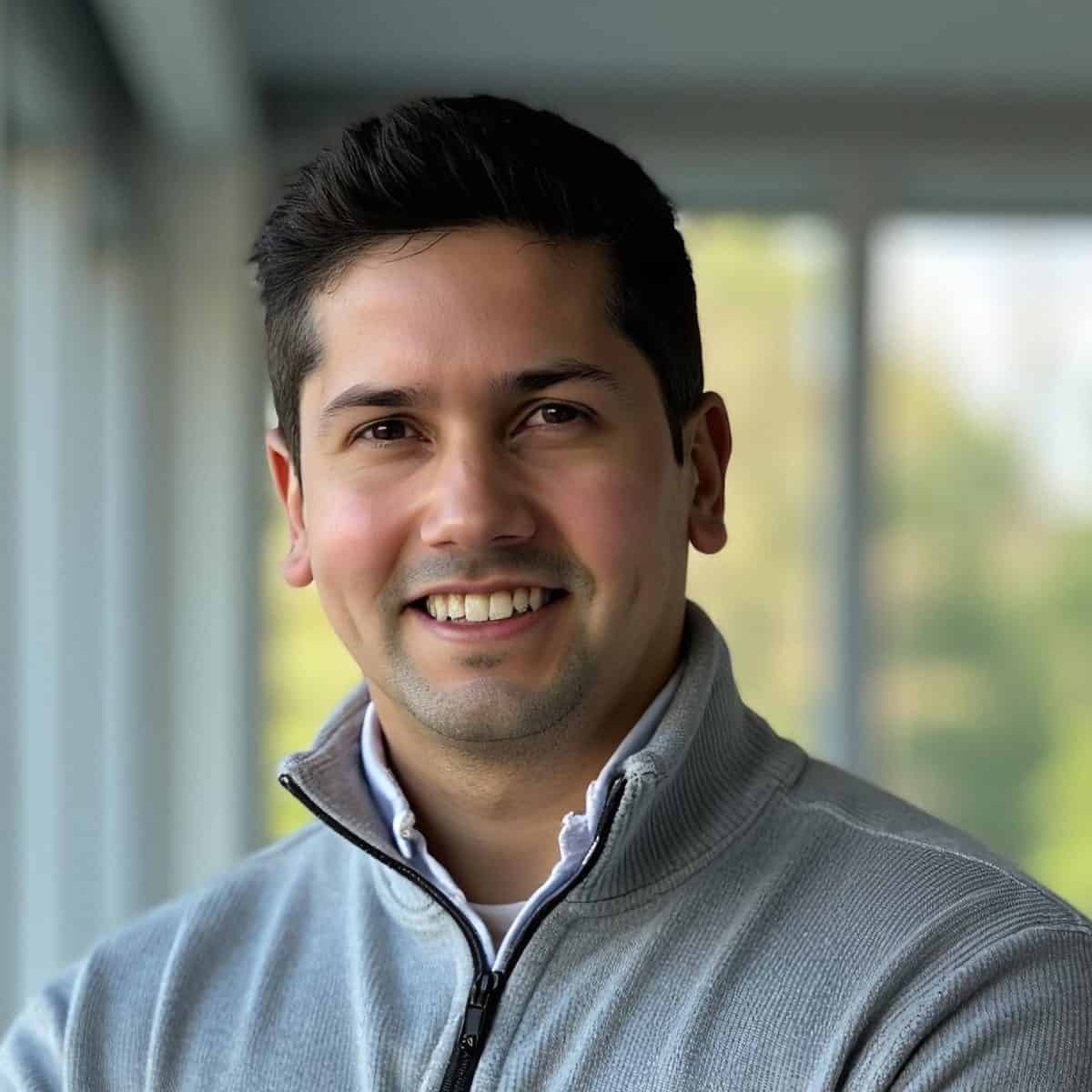
We recently sat down with the five techbio companies accepted into the Fall 2026 Drive cohort to learn more about their science, their “ah-ha” moments, and how Drive is changing the trajectory of their business. Next up, it’s ScriptBio AI, a techbio company using generative AI to design compact gene editors, one target at a time. We spoke with founder and CEO, Patrick Ovando-Roche.
1. What problem are you obsessed with solving—and why does it matter right now?
My father had Parkinson’s, and my mother has Alzheimer’s. Watching their diseases progress despite treatment is why I built ScriptBio AI. I’m obsessed with finding what drives these diseases so we can work toward treatments that change their course before the damage is irreparable.
We’re building a causal AI drug discovery platform to help drug developers identify those drivers, starting with knee osteoarthritis. Advances in AI and human biological data give us new ways to approach this problem. As more people live longer, we need those years to be healthier years. Ultimately, our ambition is to extend human healthspan, helping people keep their mobility and independence for longer.
2. What’s a recent moment that made you think, “this could really work”?
For me, it was seeing our computational work come together into a specific shortlist of targets. We had brought together more than half a million human cell profiles across four tissues in the knee, then combined our AI predictions with a review of the biological evidence behind each candidate.
That gave us something concrete: what we would change, why it might help, and how we could test it. We’ve also filed seven provisional patent applications. Seeing that path from human data to an experiment was exciting. Our next step is to test these predictions in human cells, alongside benchmarking our model on independent datasets.
3. Since joining Drive, what’s one shift in your thinking, strategy, or network that’s had a real impact on your company?
Drive helped me get much clearer about the first step toward our bigger vision. Our mentors pushed us to explain what we’ve built, why knee osteoarthritis is our starting point, and what the next investment will enable. It also helped us think through which business model makes sense at our stage, given the current funding environment and what investors are looking for.
They encouraged us to build relationships with potential partners early, so we understand what evidence would make a collaboration valuable to them. That has helped us focus our development plan and our conversations with investors. The ambition remains broad, but the immediate goal is clear: establish the platform in knee osteoarthritis, then build toward other diseases associated with aging.
We’d welcome connections with investors and research partners interested in helping us take this next step.